London-wide leak specialists
ResidentialCommercial
Get in touch
Book an engineer

Radiator Valve Types, and Which Ones Weep

Most radiator valve leaks come from one of three places: the gland under the head, the olive in the compression joint on the pipe, or the union nut where the valve meets the radiator tail — and the part you can name is the part a plumber can quote for over the phone.

Leak Fix LondonLast updated

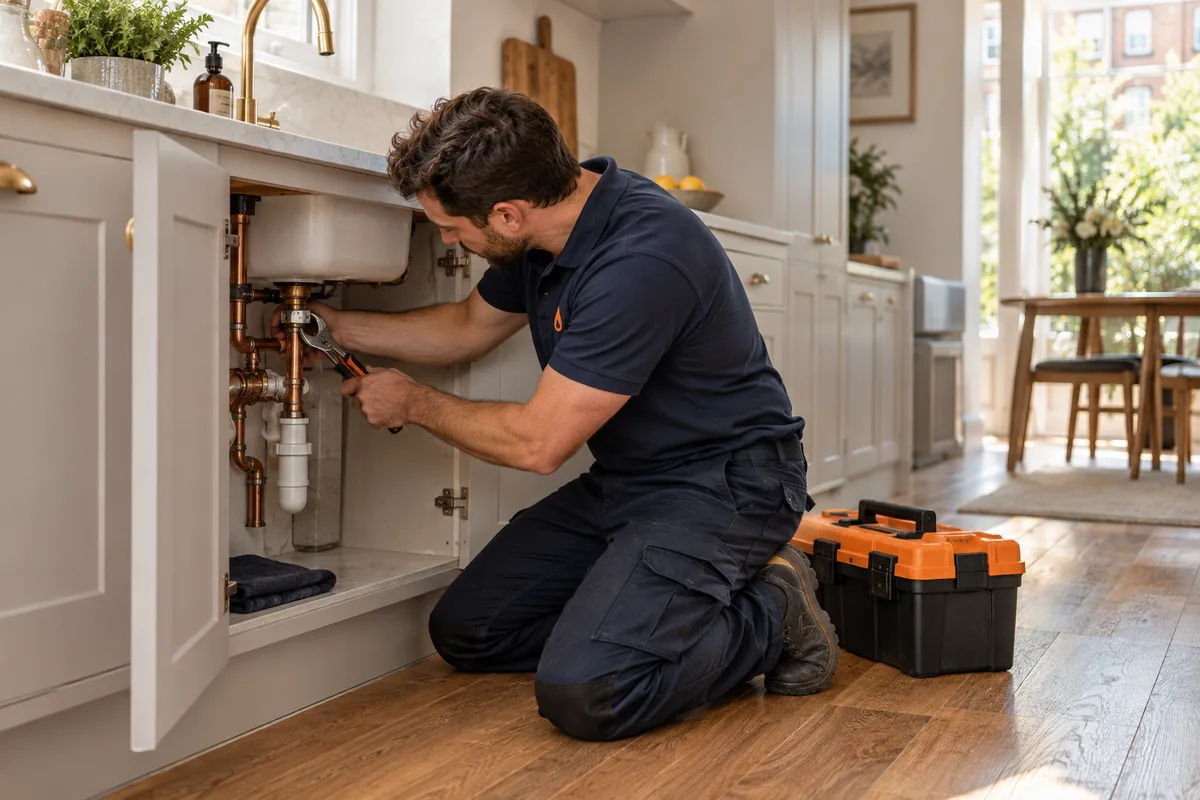
A Leak Fix London engineer working on pipework in a London home

Why naming the parts is the whole job

Almost every call about a leaking radiator valve starts the same way: it is dripping from the bit at the bottom. There are four bits at the bottom, they fail for four different reasons, and they cost very different amounts to put right. Name the wet one and you get a straight answer on the phone.

The TRV head

The dial. Numbered 0 to 5 or marked with a snowflake, it unscrews from the valve underneath by hand or with one nut. Inside, a wax or liquid capsule expands as the room warms and pushes a pin down into the valve. The head holds no water. It can fail, stick or read the wrong temperature, but it cannot leak.

The TRV body

The brass or chrome casting the head screws onto. This is the valve: water runs through it, the pin presses a spindle, the spindle closes against a seat. Part L guidance requires individual room temperature control on new and replacement wet heating in dwellings, which is why nearly every radiator fitted this century has one at one end.

The lockshield

The valve at the other end, usually under a plain cap with no numbers. Not an on/off tap for daily use: it is the balancing valve, set once so this radiator takes its fair share of flow, then left. Open yours to see what it does and the radiators furthest from the boiler get colder. Lockshield valve covers adjusting one and the leaks it gets.

The tail and the union nut

The valve does not screw into the radiator directly. A short threaded fitting called the tail screws into the radiator's bottom tapping, sealed with PTFE tape or jointing compound. The valve pulls up to that tail with a large nut — the union nut — sealing on a machined cone or fibre washer. Two seals, a centimetre apart, failing for different reasons.

The gland

Under the head, around the spindle, a seal stops water escaping up the moving shaft. On older valves it is graphite packing squeezed by a gland nut; on modern ones, rubber O-rings. This is the most common source of a radiator valve leak and the cheapest to fix.

The olive

Where the valve body meets the copper pipe there is a compression joint: a nut, and inside it a soft brass ring called an olive, crushed onto the pipe when the nut is tightened. It deforms once. It is not designed to be undone and remade, which matters more than most people realise.

Which of those actually weep

Where the water appearsAlmost alwaysWhat it needs
Directly under the head, running down the valve bodyGland or O-ringsQuarter-turn on the gland nut, or new O-rings
At the nut on the pipe side, below the valveOlive disturbedRemake the joint, usually a new olive
At the big nut where the valve meets the radiatorUnion seal or fibre washerDrop the nut, replace the washer
From the casting itself, with no joint nearbyCorroded valve bodyNew valve, no repair possible
From the underside of the radiator panelNot the valve at allSee below

A gland that has dried out

Graphite packing and rubber O-rings both rely on being compressed against a spindle that occasionally moves. A TRV sitting untouched on setting 3 from March to October has a spindle that has not moved in seven months, in a seal baked dry. Then the heating comes on, the capsule pushes, the spindle moves for the first time since spring — and it weeps. This is why the phone rings about radiator valves in October, not July.

An olive disturbed by movement

An olive crushed onto the pipe fifteen years ago is still holding unless something moved it: a radiator taken off for decorating and put back, a carpet fitter kneeling on the pipe, a washing machine hammering a joist, or the pipe growing and shrinking every time the heating cycles. On a long run clipped rigid at one end, that movement goes to the nearest joint.

A TRV pin stuck — which is not a leak

Plainly: a stuck pin causes a radiator that stays cold, or stays hot with the valve shut. It does not put water on the floor. Pull the head off and look at the pin on top of the valve body; if it is seized down, a tap and a pull with pliers frees it. It belongs here because of what happens next — people who cannot free a pin force the head, and forcing the head damages the gland.

A valve body corroded through

Brass in certain water conditions loses its zinc over years and goes porous and pink. Chrome valves in bathrooms corrode under the nut where they stay damp. Either way the weep comes out of the casting, not a joint. Nothing to tighten: the valve is replaced, and the others on that circuit are the same age.

The weep that only shows up when the heating is hot

This is the pattern that makes people doubt themselves: they check the valve on a Saturday morning, find it bone dry, and decide they imagined it. Three things change when the system fires. The water expands, so a gauge reading 1.2 bar cold reads meaningfully higher hot and every seal is pushed harder. The metal moves — body, nut, olive and pipe all grow, and not by the same amount, so a marginal joint opens a fraction. And hot water is thinner, so it gets through a gap cold water bridges by surface tension alone.

Then it evaporates. A few drops an hour onto a valve at 60 degrees never becomes a puddle; it dries on the metal, and the only evidence left by morning is a deposit.

What white and green crust are telling you

System water is not clean water. It carries dissolved solids from the day it was filled, corrosion inhibitor, and whatever the radiators shed inside. When it weeps out and dries, the water goes and everything it carried stays on the valve.

  • White or grey, chalky, sometimes crystalline — dried mineral and inhibitor residue, usually on a gland or union nut.
  • Green or blue-green — copper corrosion product from the pipe, the olive or the valve brass. Water has been sitting on that metal repeatedly, not once.
  • Rust-orange, streaking downwards — iron from the radiator or a steel pipe in the run. Often points at the radiator, not the valve.

Crust is cumulative. It builds one evaporated drip at a time, so by the time there is enough to notice from standing height, the valve has been weeping across many heating cycles — seasons, not days. Nobody finds a crusted valve that started last week.

That matters twice over. The boiler has probably been topped up to compensate, and every top-up puts fresh oxygenated mains water into the system, which drives internal corrosion. And an evaporating weep on carpet never shows as a wet patch; it wicks into the underlay and works on the boards beneath. Lift the carpet before assuming there is no damage.

What you can reasonably do yourself

  1. Dry everything and wrap kitchen roll around each nut. Leave it through a full heating cycle. The paper tells you which joint it is — nobody can work that out by looking at an already-wet valve.
  2. If it is the gland, try a quarter turn on the gland nut with the head off. Then stop and watch. This cures a good proportion of them.
  3. Do not keep tightening a compression nut. One nip is fair; the third attempt is making it worse.
  4. Check the pressure gauge. A valve weeping hard enough to drop system pressure is a different conversation from one that only makes a crust.

Where it stops being DIY: anything needing the radiator isolated and drained, any chrome valve that will not seal, any valve weeping from the body. Isolating means turning the TRV to 0 and closing the lockshield with a spanner, counting the turns so it can be reset — get that wrong and you have unbalanced the heating while fixing a drip. How to drain a radiator goes through it step by step, including why a manual cap, not the head at 0, is what reliably closes the thermostatic end.

When it is the radiator, not the valve

If the water comes from the underside of the panel, a seam, or the tapping the tail screws into, the valve is innocent. That is a pinhole in the radiator: internal corrosion in a system topped up repeatedly or left with no inhibitor. Such a radiator is replaced, not repaired, and the system flushed and dosed. A radiator leaking from the body and one leaking from the valve look identical on the floor and are different repairs.

What we charge, and when you do not need us

Our rate is £150 per hour, agreed before we attend, no call-out fee. Most single-valve jobs are inside the hour.

The part worth reading twice: if you can see the valve dripping, you do not need leak detection. Detection is for a leak you cannot find — pressure dropping with nothing visible, a warm patch underfoot, a stain on a ceiling below. A weeping TRV is a repair, not an investigation, and anyone quoting a detection survey on a valve you can point at is selling you the wrong thing. No find, no fee applies to detection: if we do not find it, you do not pay for the looking.

If the valve turns out to be a symptom — pressure still dropping once it is sorted — the loss is elsewhere on the circuit, and that is where tracing earns its money. See radiator and valve leak repair, or pricing.

Frequently asked

Which part of a radiator valve usually leaks?
The gland, which is the seal around the spindle under the head. It dries out or perishes over a summer of not moving, then weeps the first time the valve operates in autumn. The other two common points are the olive in the compression joint on the pipe and the union nut where the valve meets the radiator tail.
Can I tighten a leaking radiator valve myself?
A quarter turn on the gland nut, with the head removed, is reasonable and often works. Repeatedly tightening a compression nut is not: the olive inside has already been crushed to shape once, and forcing it further usually distorts it and turns a weep into a steady drip.
Why does my radiator valve only leak when the heating is on?
Three things change when the system fires. Pressure rises as the water expands, so every seal is pushed harder. The valve, nut, olive and pipe all expand at different rates, so a marginal joint opens slightly. And hot water is less viscous, so it gets through a gap that cold water holds. It then evaporates off the hot metal before it can pool, which is why the valve looks dry in the morning.
What does the white crust around my radiator valve mean?
It is the dissolved minerals and corrosion inhibitor left behind after weeping system water evaporated. Green or blue-green deposit is copper corrosion product from the pipe or the brass. Either way the deposit builds one dried drip at a time, so a visible crust means the valve has been weeping across many heating cycles, not since last week.
Do I need leak detection for a dripping radiator valve?
No. Detection exists to find a leak you cannot see — falling boiler pressure with nothing visible, a warm patch underfoot, a stained ceiling. A valve you can watch dripping needs a repair. If pressure keeps dropping after the valve is fixed, that is the point at which tracing the rest of the circuit becomes worth paying for.

Sources

No find, no fee · £150 per hour. The rate is fixed before we attend and does not rise for a difficult property, an awkward access or an evening visit. The total depends on how long the job takes; the rate cannot change.