Why the London version of this is a different question
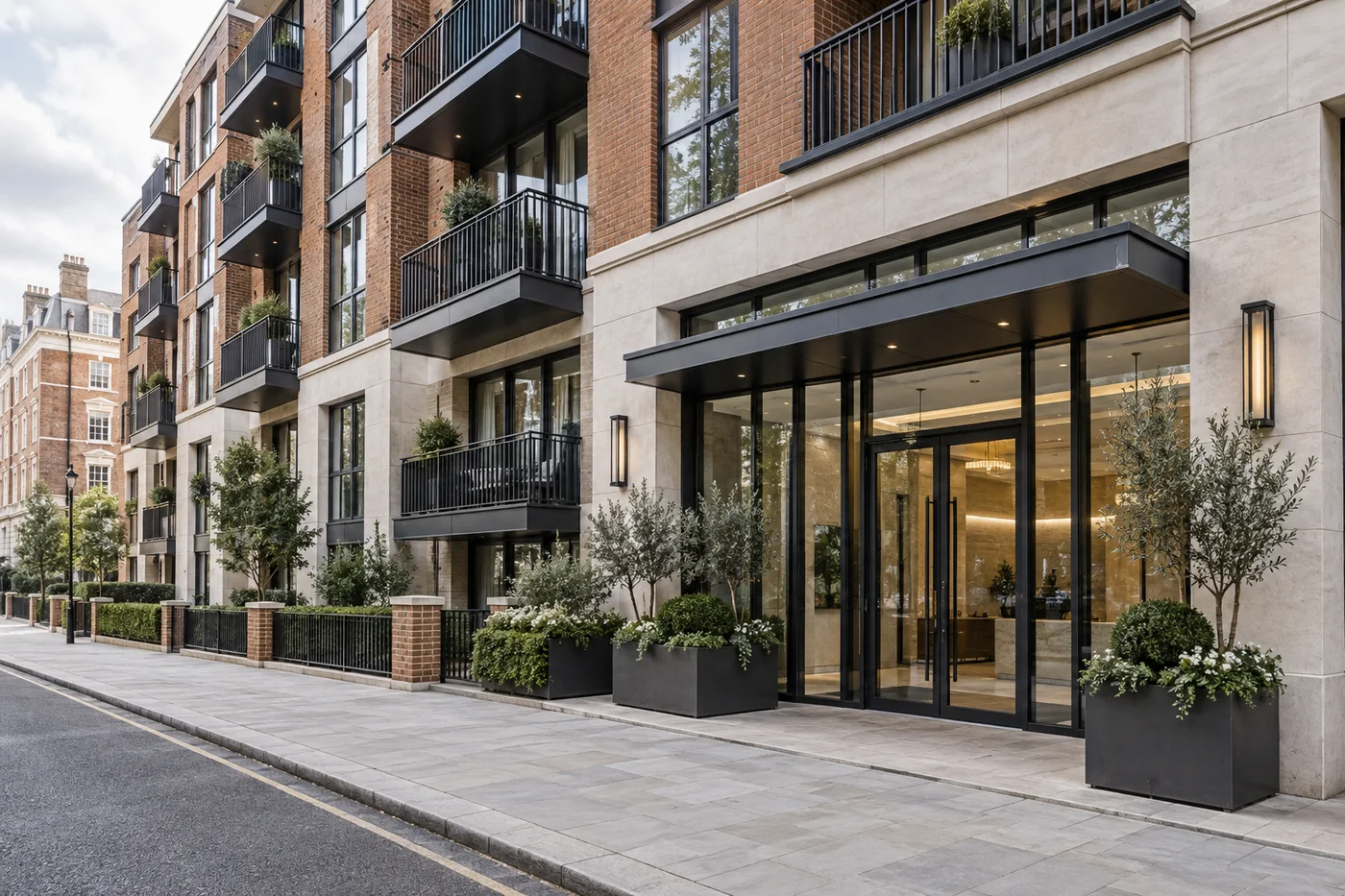
Most published advice on escape of water is written for a house: one policy, one policyholder, one building, one excess. London is mostly not that. It is conversions, purpose-built blocks, mansion flats, ex-council slabs and new-build towers, and in all of them the building is insured once, by the freeholder, for everybody.
That changes three things at once. The person who owns the policy is usually not the person standing in the wet room. The pipe that failed may be inside your flat but demised to someone else, or outside your flat and still yours. And the water almost always crosses a boundary, which means at least two parties have an opinion about the cause before anyone has measured anything.
None of that changes the underlying insurance principles — sudden versus gradual, notification, excess. What changes is the order you have to do things in, and who you have to do them with.
Trace and access, quickly, and the bit that is different in a flat
Trace and access is the clause that pays to find the leak and to open up the building to reach it. It is not the repair to the pipe, and it is not the drying and redecoration — those sit elsewhere in the policy, and the pipe itself is very often excluded from its own claim. The full breakdown is in what trace and access pays for and what it does not.
The flat-specific problem is this: the access can be in a property that is not the claimant's. If water is running down your kitchen wall and the failed joint is under a floor two storeys up, the boards that have to come up belong to somebody else, and the making-good afterwards is in their flat. Insurers handle that routinely on a block policy, because the policy covers the building rather than one flat. It becomes messy when the two flats are separately insured, or when the block policy has lapsed on escape of water after repeated claims.
A second flat-specific trap: trace and access limits are typically a few thousand pounds and sit per claim, not per flat. On a leak that has soaked three flats, that one limit has to cover everything the investigation opens.
Whose policy it is — and what changed at the end of 2023
The freeholder or managing agent arranges the buildings policy, you pay for it through the service charge, and historically you had very little standing to argue with it. The Financial Ombudsman Service now describes these as multiple-occupancy buildings insurance, or MOBI, and sets out plainly what a leaseholder can bring to it.
In short: the Ombudsman can usually look at a leaseholder's complaint about a claim for damage to their leased property. For policies sold or renewed after 31 December 2023, it may also look at a leaseholder's complaint about the sale or renewal of the policy and the information the insurer gave. It will ask for the policy terms, the schedule and the lease. Where a complaint would affect many leaseholders at once, it points people to the Leasehold Advisory Service first.
Two practical consequences. You are entitled to see the policy wording and schedule for the block, so ask the agent for them in writing at the start rather than at the point of argument. And a claim handled badly by the block insurer is not a dead end just because your name is not on the policy.
Your own contents policy still handles your belongings, flooring you installed, and alternative accommodation. Two claims, two excesses, two sets of evidence, and it is worth doing the arithmetic on both excesses before you notify either one.
Getting into the flat where the water is coming from
This is the part that stalls London claims for months, and it is an access problem rather than an insurance problem. The neighbour is usually not refusing out of malice; they are refusing because a request framed as "you are flooding me" reads as an accusation, and a leak they cannot see feels imaginary to them.
What works, in order: ask the managing agent to exercise the access power the lease almost always gives them; frame the visit as a non-invasive survey that may clear their flat entirely, which is true and is often the outcome; and keep every message, because dates of request and refusal matter to the insurer later. If the flat above is rented, the person who can agree is the landlord, not the tenant. Leak from the flat above: who pays covers the liability side of the same situation.
What kind of London building you are in changes where the water is
Not an insurance point, but it decides how long detection takes and how much has to be opened — which is the number the trace and access limit has to cover.
| Building | What usually fails, and what it means for access |
|---|
| Victorian or Edwardian conversion | Bathrooms built over other people's rooms, pipework buried in later partitions, lath and plaster ceilings that hold water then drop. Source is frequently not above the stain. |
| Purpose-built 1930s–60s block | Original steel and copper reaching end of life, communal risers in cupboards, cold tanks in shared roof spaces. A riser is the freeholder's, not yours. |
| Ex-local-authority slab block | Concrete floors, chased-in pipework, service ducts shared between flats. Very little can be opened cheaply, so non-invasive detection matters more here than anywhere. |
| Mansion flat | Long horizontal runs, multiple later refits layered over each other, soil stacks and supply in the same boxing. Cause is often a previous alteration rather than age. |
| 2000s-onward new build | Manifold plumbing in screeded floors, underfloor heating, acoustic layers that spread water sideways before it shows. Warranty may be in play alongside the policy. |
The evidence an insurer actually asks for
- When it started and how you knew. The date you first noticed anything, not the date it became obvious. This is the question the gradual damage exclusion turns on.
- Photographs taken while it was wet, with the surrounding room visible so the location is provable later.
- The cause, identified and written down — what failed, where, and how that was determined. Not "leak found and repaired".
- What you did to stop it, and when. Isolating the supply and recording the time is worth more than it sounds.
- The lease and the block policy schedule, if you are a leaseholder. The Ombudsman asks for both; so does a competent loss adjuster.
- Moisture readings, ideally before and after drying, if reinstatement is going to be argued about.
The report from a detection visit is what turns most of that into a document the insurer can act on. What an insurer-ready report contains sets out the sections. A one-line invoice saying a leak was found is the single most common reason a claim goes into a query loop.
The order that keeps a claim alive
- Stop the water. Your stop valve, the flat above's, or the communal one the agent holds. Note the time.
- Photograph and record it wet, before you mop, dry or strip anything out. Wide shot, then close, then the meter if the supply is suspect.
- Tell the managing agent and the block insurer, in writing, on the same day. Notification is a policy condition, and late notification is a live reason for decline. Tell your own contents insurer separately.
- Get the cause established properly — non-invasive first, with a written finding — before anyone opens a floor or a ceiling. Work done before the insurer knows about it is work the insurer did not authorise.
- Repair, then dry, then reinstate, in that order. Reinstating a wet structure creates a second claim, and insurers know it.
The step people skip is three, and they skip it because a builder was already on site. Everything after that becomes an argument about what would have been necessary.
What we decide, and what we do not
We attend, isolate and pressure test, survey with thermal imaging and moisture mapping, use tracer gas on a drained circuit where that is what the situation needs, and then state in writing where the water is coming from and what has to be opened to reach it. That finding is frequently what moves a stalled block claim, because it replaces two neighbours' opinions with one measurement.
We do not decide whether your policy covers it, we do not interpret your lease, and we will not tell you an insurer will pay. That decision belongs to the insurer, and anyone promising you otherwise before they have read your schedule is guessing. What we can say is that claims fail far more often on missing evidence than on the wording.
Detection is £150 per hour, agreed before we attend, with no call-out fee. If we do not find the leak you do not pay for the time we spent looking. The written report is part of the visit, not an extra. Repairs, and putting floors, ceilings, plaster and tiling back afterwards, are handled in house — see trace, access and reinstatement.