This is not a slur on plumbers
A general plumber is the correct and cheaper call for most water problems in a house. Visible leaks, failed valves, tap cartridges, a split flexi hose, a cylinder, a stopcock that will not close: all plumbing, none of it detection. Paying a specialist rate to look at a weeping compression nut is money set on fire.
The distinction only matters when the water is arriving somewhere and nobody knows where it left the pipe. At that point the tools and the sequence are the job, and a damp meter on its own is a poor tool for it, because it maps where the water ended up rather than where it came from.
The six questions
1. Which detection methods do you carry?
Listen for the list, not the confidence. Aspect names nine on its own leak detection page: thermal imaging, tracer gas, acoustic surveys, moisture meters, borescope cameras, salts analysis, pressure tests, tracer dyes and electric voltage tests, and states that several methods are typically combined. ADI names tracer gas, acoustic listening, leak correlation, thermal imaging, borescope cameras, moisture meters, CCTV drain survey and drone inspection. Pimlico's rate card footnotes its leak detection line as including thermal, acoustic or gassing detection.
Dyno-Rod's leak detection pages name no methods and publish no price, as checked on 19 September 2026. That does not mean their engineers lack equipment; it means you cannot establish it from the page and will have to ask.
A firm carrying one method will find what that method finds. That is a real constraint, not a criticism.
2. In what order do you use them, and what do you do first?
The right answer starts with isolation and a pressure test, before any camera comes out of the van. You prove the loss is real, work out which circuit it is on, and get a rough size for it. Skipping that is the most expensive shortcut in the trade, because everything afterwards is then a search without a target.
If the first answer you hear is "we'd come and have a look with the thermal camera", you have learnt something.
3. What can each method not find?
This is the question a generalist cannot bluff, and the answers are unglamorous.
| Method | Strong on | Blind to |
|---|---|---|
| Acoustic | Pressurised mains, hard floors, a leak with force behind it | Low-pressure heating circuits, and anything in a noisy block |
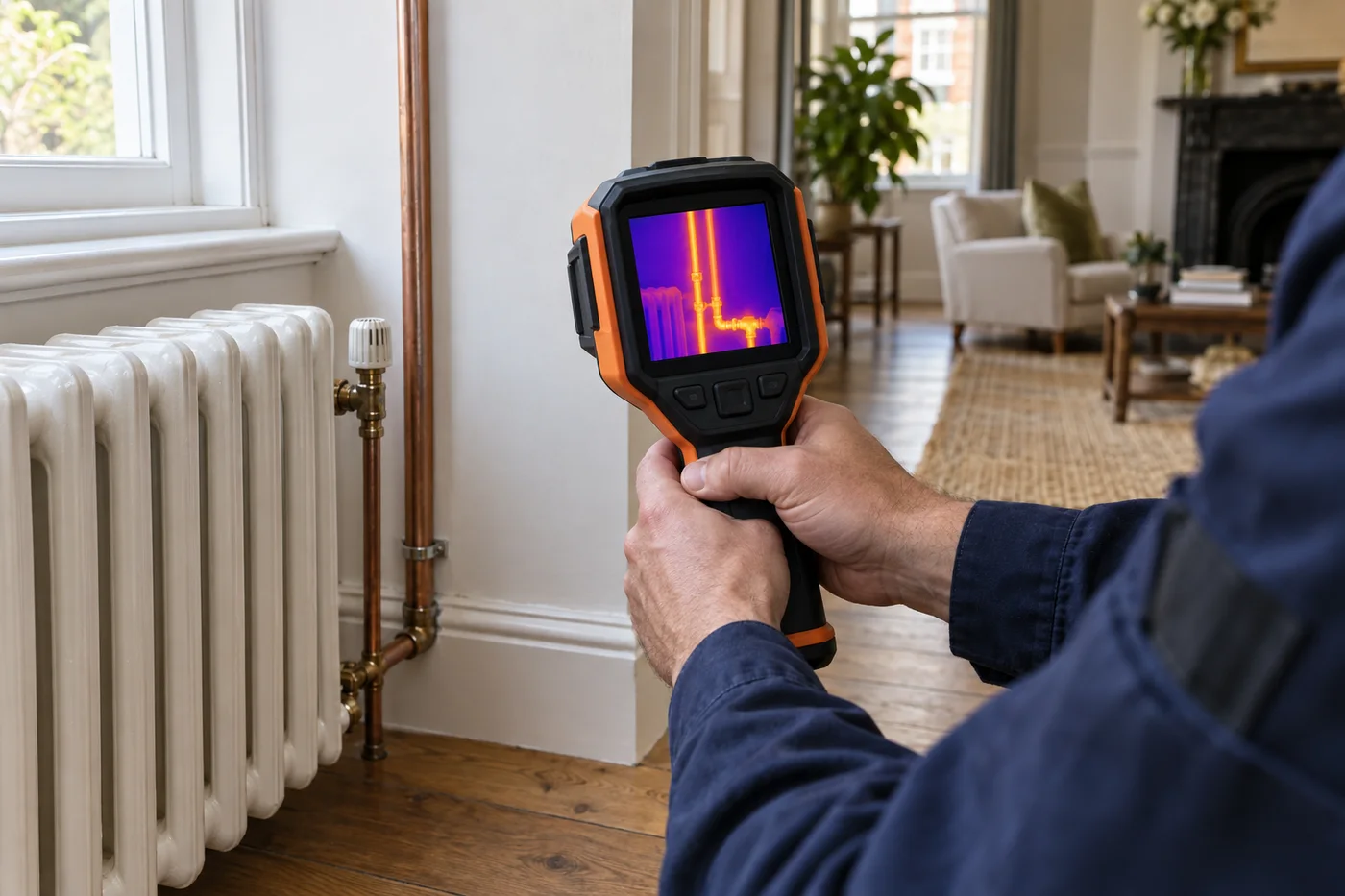
| Thermal imaging | A hot run under screed or tile, and the plume where hot water spreads | A cold feed, unless the pipe has been artificially heated |
| Moisture mapping | Mapping the extent of the damage for a claim | The source. Water runs along joists and reappears three metres away |
| Pressure test | Proving a loss exists and sizing it | Telling you where on the circuit it is |
| Tracer gas | What everything else missed, including cold feeds under solid floors | Nothing much, but it needs the circuit drained, which takes time |
4. Can you isolate and pressure test my system?
A plumber can. The follow-up is the real question: can they isolate a single circuit rather than the whole property, and can they hold and log a test rather than glance at a gauge. Boiler pressure that drops overnight and recovers when topped up is a different investigation from a mains supply losing half a litre a minute, and the two need different tests.
5. Do you carry tracer gas, and will you drain the circuit?
This is the clearest dividing line in the trade, because tracer gas takes equipment, a drained system and patience, and it finds what acoustic and thermal cannot. A hydrogen and nitrogen mix is pushed through the drained pipe and picked up at the surface. It is non invasive, and it is generally the last step rather than the first precisely because the draining and refilling is the time cost.
If a firm does not carry it, a cold feed under a solid floor may simply be beyond what they can locate without opening things. Ask. Our own is at gas tracer leak detection.
6. What does the report contain?
A specialist's output is a document, not a verbal summary at the door. It should state what was tested, what was ruled out, which method located the leak, exactly where it is, what was opened to reach it, and photographs. ADI publishes that every investigation ends with a written report by the attending engineer, supported by photographs and video, formatted for trace and access and escape of water insurance claims. 0800 Homefix publishes the contents of theirs, including the engineer's name, Gas Safe number and qualifications, the confirmed failure point and the extent of moisture spread.
Those are good published standards and worth holding any firm to, including us. What a loss adjuster does with it is in insurance claims and trace and access.