What Worcester say EA means
The error-code table in Worcester Bosch's own Greenstar user instructions gives EA one description: flame not detected. Alongside it they list three things to check if it is safe to do so. Whether the gas is on in the house. Whether the condensate pipe has frozen. Whether the flue outlet is blocked.
The boiler called for a flame and its sensing probe did not see one, either at ignition or partway through a burn, so it shut the gas valve and locked out. That is the appliance behaving correctly. It also means the fault sits on the gas and combustion side of the boiler, not the water side.
The three checks, in the order worth doing them
1. Is the gas on
Try another gas appliance. If the hob will not light either, the problem is the supply and not the boiler. On a prepayment meter, check the credit. Then check the gas isolation valve under the boiler, which is a quarter-turn lever and gets knocked in cupboards.
2. Is the condensate pipe frozen
In cold weather this is the single most common cause. Worcester's own guidance on blocked condensate is direct: the boiler may make a gurgling sound when attempting to start, and it may repeatedly lock out with an EA code on the display. A condensing boiler drains acidic waste water through a narrow plastic pipe, and where that pipe runs outside it freezes at its most exposed point, or at a bend or elbow.
Worcester's advice for thawing is to pour warm water along the pipe, and their guidance is explicit that it must not be boiling water. It is also explicit about height. Only thaw a condensate pipe at ground level that you can easily reach, and never attempt one at height. Then reset the boiler.
3. Is the flue blocked
The third of Worcester's checks, and the one to look at rather than touch. Nests, debris and, on a terminal close to the ground, snow. If the terminal is out of easy reach, that is an engineer's job.
What EA is not
It is not low water pressure. Worcester keep those separate. On the Greenstar CDi Classic the error-code table has no low-pressure entry at all, and low system water pressure appears instead in the fault-finding table, where the stated remedy is simply to repressurise the system. So a Worcester boiler short of water tends not to throw a code at you. It shows a low gauge and stops heating properly.
It is also not, by itself, a reason to call a leak detection company. We would rather say so on this page than take the booking.
The version of EA that is a water problem
There is a real overlap, and it is worth checking before you accept an expensive parts diagnosis.
Water getting inside the boiler case can produce a flame loss lockout. A weeping joint above the appliance, a leak from a pipe in the ceiling void of the flat above, or a failed internal seal can drip onto the ignition electrode or the flame sensing probe. A wet electrode does not spark reliably, and a wet probe does not report the flame the boiler has actually lit. The result on the display is EA, and it comes and goes with no relation to the weather, which is what distinguishes it from a frozen condensate pipe.
The signs to look for, without opening anything: staining or standing water on the tray under the boiler, corrosion on the case bottom edge, damp on the wall behind or below the boiler, or a ceiling stain directly above it.
The other pattern is EA with a falling pressure gauge. That combination means the system is losing water as well, and the loss is the first thing to deal with, because there is no sense recommissioning a boiler on a circuit that keeps emptying. Worcester boilers losing pressure covers that case.
Who to call
Worcester's own instruction against the error code table could not be plainer: do not try to rectify the listed faults yourself, and contact a Worcester Bosch service engineer or another Gas Safe registered engineer. Everything EA points at, other than the condensate pipe you can safely thaw from the ground, is inside the case and is gas work.
Call us instead when the water is the story:
- Water is dripping into the boiler, or the tray beneath it is wet and you cannot see why.
- A ceiling above or beside the boiler is staining, particularly in a flat with a bathroom overhead.
- The pressure gauge falls between lockouts and you are topping the system up to keep it going.
- The relief valve discharge pipe outside drips whenever the boiler fires.
What we would do about the water
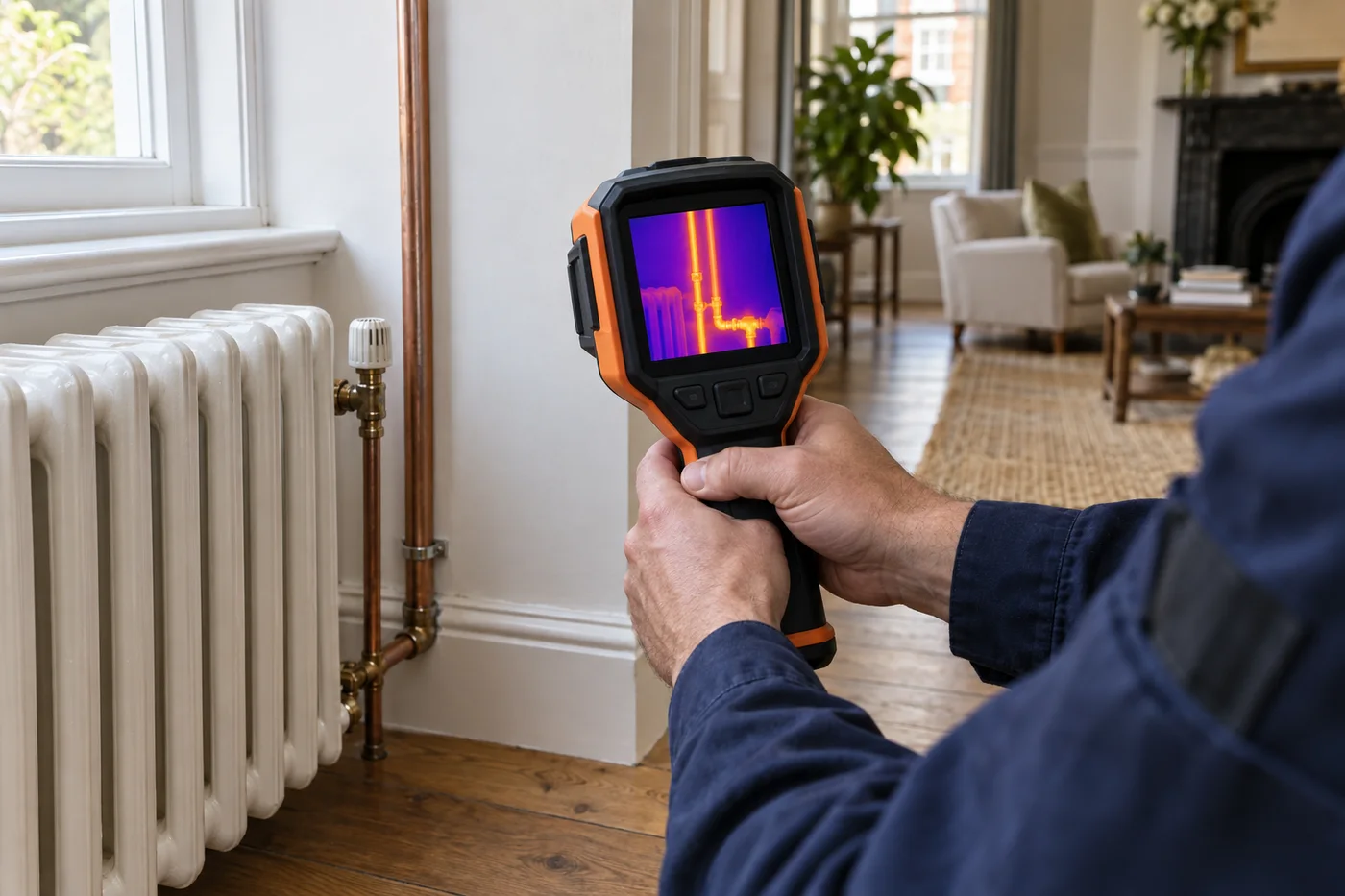
Isolate and pressure-test to confirm and size the loss, then trace it with acoustic equipment, thermal imaging and moisture mapping, and with tracer gas on a drained circuit where the pipe is buried or in a ceiling void. Nothing is opened until the leak has a location, and it is repaired and made good in the same job rather than reported and handed back.
The rate is £150 per hour, fixed before we attend, with no find, no fee on the time spent looking. See boiler and heating leak repair, ceiling leak repair if the water is coming from above, or the rest of the boiler pressure hub.